
Product Owner Stakeholder Leadership
Stakeholders are essential to good product ownership.
They bring business context, customer commitments, operational constraints, market knowledge, support issues, risks, and opportunities the team may not see. A Product Owner who ignores stakeholders will make poorer product decisions.
But Product Owners also need to lead stakeholders.
That means listening carefully, making tradeoffs visible, helping stakeholders discuss priorities with one another, and saying no or not now when a request does not fit the current goal.
A Product Owner is not an order taker. A Product Owner is a product decision maker who uses stakeholder input well.
Who This Page Is For
This page is for Product Owners, product managers, Scrum Masters, agile coaches, managers, and stakeholders who want better product decisions and less stakeholder-driven priority churn.
It is especially useful when stakeholders bypass the Product Owner, compete for team capacity, treat every request as urgent, or expect the product backlog to include everything they ask for.
In This Page
You will learn how Product Owners can work with stakeholders without becoming feature brokers, how to collaborate with stakeholders collectively when that helps, how to say no or not now, and how to use shared goals to make tradeoffs clearer.
You will also learn common stakeholder leadership problems and practical questions for improving stakeholder alignment.
Stakeholder Leadership Is Part of Product Ownership
Product ownership involves making product decisions with incomplete information.
Stakeholders provide some of that information. They may understand customers, business goals, revenue, support costs, compliance concerns, operations, sales commitments, marketing windows, or organizational strategy.
The Product Owner should seek that input.
The problem begins when stakeholder input turns into stakeholder control. If every stakeholder can insert work directly into the sprint, reorder the product backlog, or reverse the Product Owner’s decisions, the team does not have product ownership. It has competing product opinions.
Good stakeholder leadership creates a clear path from input to decision.
Stakeholders are heard. Their needs are understood. Their concerns are considered. But one Product Owner, or one clearly defined product decision path, turns that input into priorities the team can act on.
Stakeholders Are Not All the Same
Some stakeholders care deeply about the product but have little decision authority. Others have significant authority but only occasional interest.
A Product Owner should know who the key stakeholders are and why each matters. Some need frequent conversation. Some need periodic updates. Some need to be consulted only when a decision affects their area.
Stakeholder leadership starts with knowing whose input is needed for which decisions.
Help Stakeholders Hear Each Other
Many Product Owners work with stakeholders one at a time, and often that is exactly right.
That can be appropriate. A one-on-one conversation is often the best way to understand a stakeholder’s concern, learn important context, or prepare for a difficult decision.
But one-on-one conversations are not enough when stakeholders want different things from the same limited team capacity. One stakeholder asks for a feature. Another asks for something different. A third objects to the first request. The Product Owner can end up carrying messages among them and privately reconciling conflicts that stakeholders should sometimes hear directly.
When priorities are in conflict, it can help to bring key stakeholders together, or at least make their competing needs visible to one another.
This does not mean creating a new Scrum Team, adding heavy process, or scheduling a standing meeting for every stakeholder. It means using collective conversation when it will improve the decision. Key stakeholders may need to hear the product goal, understand competing needs, and see how tradeoffs are being made.
Stakeholders often make better requests when they understand the requests others are making.
Make the Shared Goal Visible
Stakeholder conflict is easier to handle when everyone understands the larger goal.
Without a shared goal, each request competes on volume, urgency, politics, or persistence. The Product Owner hears, “My feature is important,” over and over.
With a shared goal, the conversation improves.
The Product Owner can ask:
- Does this request help us achieve the current product goal?
- Is this more important than the work already selected for the milestone?
- What would we delay if we said yes?
- What outcome are we trying to create?
- Is there a smaller version that would satisfy the need?
A shared goal does not eliminate disagreement. It gives the Product Owner and stakeholders a better way to discuss disagreement.
This is especially important when stakeholders bring urgent requests. Some urgent items matter. Others are simply recent, loud, or politically visible. A clear goal helps the Product Owner separate true importance from noise.
Say No or Not Now
Product Owners need to say no.
Sometimes that no is permanent: the request does not fit the product, the strategy, the users, or the value the team is trying to create.
Sometimes the no is temporary: the request may be useful later, but it does not matter enough to displace the work that matters more now.
That distinction helps. Saying “not now” can soften the conversation because it acknowledges the stakeholder’s need without pretending the request belongs at the top of the backlog today.
But the Product Owner should still be clear. If the answer is no, avoid leaving the stakeholder thinking they should ask again next month. If the answer is not now, explain when the request might be reconsidered or what would need to change.
Saying no should not sound dismissive. Thank the stakeholder for raising the request. Make sure you understand why it matters. Then explain the decision in terms of the product goal, the team’s limited capacity, and the consequence of saying yes.
A Product Owner does not need a long list of reasons. One strong reason is usually better than five weak ones.
Explain the Consequence of Saying Yes
Stakeholders often experience no as a loss.
The Product Owner can improve the conversation by explaining what saying yes would cost.
For example:
We can add this to the upcoming sprint, but doing that means removing the reporting work we committed to for the renewal milestone.
Or:
We can start this now, but it means delaying the usability work that should reduce support calls next month.
This changes the conversation from “Do we want this?” to “Do we want this more than the work it would replace?”
Steve Jobs made a similar point about focus: it is not just saying yes to one good idea; it is saying no to many other good ideas.
Product Owners face the same challenge. Most stakeholder requests are not bad ideas. The hard part is deciding which good ideas the team will not pursue now so it can make meaningful progress on the goal that matters most.
That is the Product Owner’s job: to make tradeoffs visible.
When stakeholders understand that team capacity is finite, they are more likely to participate in a real product decision rather than a request escalation.
Use the Product Backlog to Show Decisions
The product backlog should make stakeholder tradeoffs visible.
It should show what the team is likely to consider soon, what is later or uncertain, and what goal the top of the backlog supports. It should not be a hiding place for every request or a promise that every idea will eventually be delivered.
A stakeholder who only sees a backlog item move down may feel ignored. A stakeholder who understands why it moved down may still disagree, but at least sees the tradeoff.
Use Sprint Reviews for Stakeholder Feedback
Stakeholders need regular opportunities to inspect the product, provide feedback, and understand what the team is learning.
The Sprint Review is the best Scrum event for that. It gives stakeholders a chance to see working product, respond to what has changed, and influence what the Product Owner considers next.
Product Owners should prepare stakeholders for Sprint Reviews. The goal is not merely to put on a demo. The goal is to inspect progress toward a product goal and learn what should happen next.
Protect the Team Without Isolating the Team
Stakeholder leadership includes protecting the team from constant priority changes.
That does not mean hiding the team from stakeholders. Developers benefit from hearing customer problems, business constraints, and stakeholder feedback directly. Stakeholders benefit from hearing technical tradeoffs and implementation options from the people doing the work.
The Product Owner should not become a wall between stakeholders and the team.
The Product Owner should create useful communication channels while protecting the team’s focus. Stakeholders should know how to raise ideas, when they will be considered, and why they should not interrupt the sprint unless something truly important has changed.
The team should hear enough stakeholder context to make better decisions without being pulled into every stakeholder conflict.
Use Evidence When Possible
Stakeholder conversations are harder when everyone argues from opinion.
Product Owners should use evidence whenever it is available. Evidence may come from customers, users, analytics, support tickets, sales patterns, research, experiments, production data, or working product.
Evidence does not make every decision obvious. It does improve the conversation.
A stakeholder request supported by evidence should be taken seriously. A request based only on one person’s preference may still matter, but it should be treated differently.
Product Owners can help stakeholders by asking:
- What problem are we trying to solve?
- Who is affected?
- How often does this happen?
- What evidence do we have?
- What would change if we solved it?
- How will we know whether the solution worked?
These questions move the discussion from preference to product impact.
Common Stakeholder Leadership Problems
Common problems include:
- Stakeholders bypass the Product Owner. The team loses focus, and the Product Owner loses the ability to make tradeoffs.
- The Product Owner becomes a messenger. Carrying requests is not the same as making product decisions.
- Stakeholder tradeoffs stay hidden. One-on-one conversations still matter, but competing priorities sometimes need to be visible to key stakeholders.
- Every request is treated as urgent. Urgency is not the same as importance.
- The Product Owner avoids saying no. Avoiding no may preserve comfort today, but it creates confusion later.
- Stakeholders are surprised too late. Stakeholders may still disagree with a decision, but they should not be blindsided.
Is Stakeholder Leadership Working?
Use these questions to find the next stakeholder conversation the Product Owner may need to have.
- Do key stakeholders understand the current product goal?
- Does the Product Owner know which stakeholders matter most for which decisions?
- When priorities conflict, do stakeholders have a way to understand one another’s needs and the tradeoffs involved?
- Can the Product Owner say no or not now without damaging trust?
- Do stakeholders understand the consequence of saying yes to new work?
- Is there a clear path for stakeholder ideas to be considered?
- Are stakeholders using Sprint Reviews to inspect product progress and provide feedback?
- Does the product backlog show current decisions rather than every request ever made?
- Is the team protected from unnecessary interruptions without being isolated from useful stakeholder context?
- Are decisions informed by evidence when evidence is available?
This is not a stakeholder scorecard. Use it to decide whether the next improvement should be a clearer product goal, better stakeholder alignment, more evidence, a stronger no, or a better path from input to decision.
Common Questions About Product Owner Stakeholder Leadership
Who Are Product Owner Stakeholders?
Stakeholders are people who care about or are affected by product decisions.
They may include customers, users, executives, sales, marketing, support, operations, legal, compliance, finance, product managers, business leaders, and others inside or outside the organization.
Should Stakeholders Decide Product Priorities?
Stakeholders should influence product priorities by providing input, evidence, constraints, and feedback.
The Product Owner remains accountable for turning that input into a clear priority order or product decision path.
How Should Product Owners Say No to Stakeholders?
Thank the stakeholder, show that you understand the request, explain the most important reason, and describe the consequence of saying yes.
When the no is temporary, say not now and explain when the request might be reconsidered or what would need to change. When possible, connect the answer to the shared product goal.
Should Stakeholders Attend Sprint Reviews?
Yes, key stakeholders should usually attend Sprint Reviews.
Sprint Reviews are one of the best opportunities for stakeholders to inspect real progress, give feedback, and help the Product Owner decide what should happen next.
What If a Powerful Stakeholder Keeps Overruling the Product Owner?
Then the organization has a product ownership problem, not just a stakeholder problem.
The Product Owner needs enough authority to make meaningful product tradeoffs. If major decisions belong elsewhere, that decision path should be explicit so the team is not caught between competing voices.
Recommended Articles
The Product Owner’s Second Team
Explains why Product Owners can improve stakeholder alignment by helping stakeholders understand one another’s needs instead of managing every request only one-on-one.
Six Guidelines for Saying No to a Stakeholder
Practical guidance for saying no clearly, respectfully, and in a way that preserves stakeholder trust.
What Product Owners Do and 7 Mistakes to Avoid
Includes guidance on avoiding unnecessary sprint interruptions, listening to feedback, and keeping stakeholder pressure from derailing the team.
What Does a Product Owner Do, When, and Why?
Explains how Product Owner responsibilities occur over time, including stakeholder conversations, prioritization, and backlog decisions.
Product Owners Should Prioritize Importance Over Urgency
Useful when stakeholder pressure makes the most recent request seem more important than the current product goal.
Now Vs. Not-Now Prioritization Along with Medium-Term Goals
Shows how a medium-term goal can help Product Owners say not now without losing sight of future possibilities.
How to Engage & Help Busy Product Owners
Helpful for teams and Scrum Masters when a Product Owner’s stakeholder responsibilities make them hard to reach.
Related Pages
Product Owner Role and Responsibilities
Learn how Scrum defines the Product Owner accountability and the decision authority expected of the role.
Product Backlog
Learn how Product Owners and teams use the product backlog to make tradeoffs visible.
How to Prioritize a Product Backlog
Learn how to use formal prioritization for larger planning decisions and lighter adjustments before each sprint.
Sprint Review
Learn how Sprint Reviews help Product Owners, teams, and stakeholders inspect the product and adapt future plans.
All Articles on This Subtopic
Explore Mountain Goat Software articles related to Product Owner stakeholder leadership, stakeholder alignment, saying no, prioritization, stakeholder feedback, and Product Owner decision authority.
Product Owner Stakeholder Leadership
- The Product Owner’s Second Team
- Six Guidelines for Saying No to a Stakeholder
- What Product Owners Do and 7 Mistakes to Avoid
- What Does a Product Owner Do, When, and Why?
- Product Owners Should Prioritize Importance Over Urgency
- Now Vs. Not-Now Prioritization Along with Medium-Term Goals
- How to Engage & Help Busy Product Owners
Stakeholder Leadership Resources
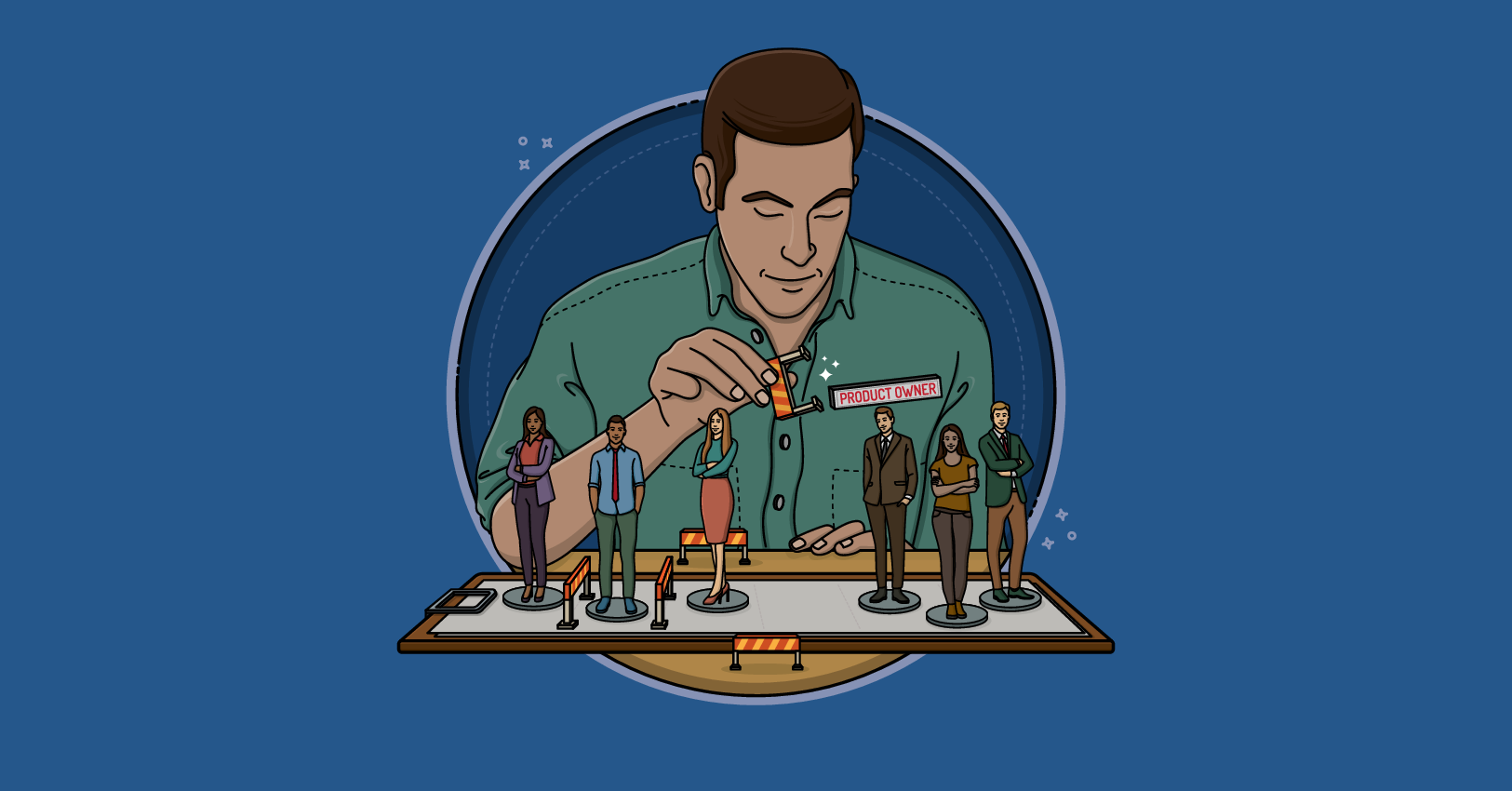
Successful product owners will see their stakeholders as a team, not merely a set of individuals.
Telling a stakeholder you can’t work on their feature is difficult. Here are ways to make that conversation easier.
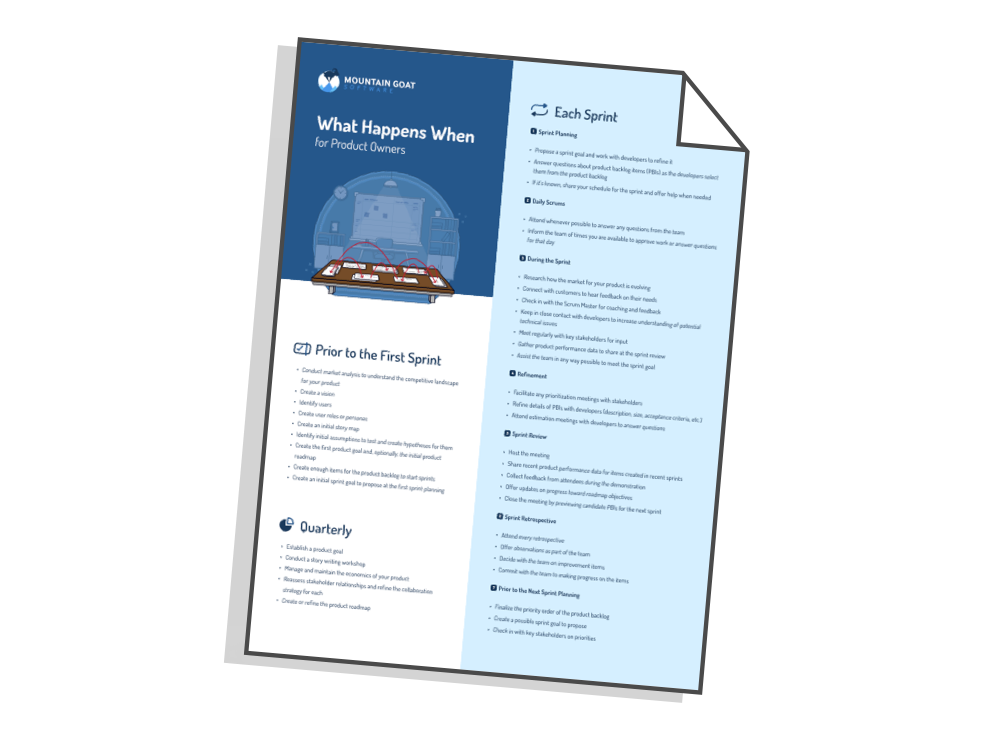
A downloadable guide for understanding what Product Owners do and when those responsibilities occur.