
Product Owner Skills and Characteristics
Effective Product Owners help teams build the right product in the right order.
That takes more than maintaining a backlog. Product Owners need enough product judgment to make good tradeoffs, enough communication skill to keep people aligned, enough authority to make decisions, and enough availability that the team is not left waiting or guessing.
Some people enter product ownership from product management, business analysis, project management, UX, development, testing, customer support, or direct product use. Those paths can all work. What matters is whether the person can learn the product, work with stakeholders, collaborate with the team, and make timely decisions when there are more good ideas than the team can possibly build.
Who This Page Is For
This page is for current Product Owners, aspiring Product Owners, Scrum Masters, agile coaches, managers, and stakeholders who want to understand what makes the Product Owner role work well.
It is especially useful when someone is deciding whether to become a Product Owner, choosing a Product Owner for a team, or helping a Product Owner grow into the role.
In This Page
You will learn the core skills and characteristics of effective Product Owners, including domain knowledge, communication, vision, decisiveness, accountability, availability, collaboration, and stakeholder leadership.
You will also learn which skills matter less than many people assume, how to recognize whether someone is a good fit for the role, and where Product Owners can go next to improve.
What Makes a Good Product Owner?
A good Product Owner helps turn learning into decisions.
The team learns from users, customers, stakeholders, working product, market changes, technical discoveries, and each sprint. The Product Owner uses that learning to clarify product direction, order the product backlog, explain tradeoffs, and help the team understand why the next work matters.
That requires a mix of skills and characteristics.
Skills are abilities a Product Owner can develop: communication, facilitation, prioritization, backlog refinement, and stakeholder collaboration.
Characteristics are patterns of behavior that make those skills useful: accountability, availability, decisiveness, curiosity, and willingness to listen.
No Product Owner starts with all of these fully developed. The role is too broad for that. But the best Product Owners keep improving because they accept that product ownership is a decision role, not an administrative role.
Product Owner Skills
Domain Knowledge
Product Owners need enough domain knowledge to make useful product decisions.
That does not mean knowing everything. It means understanding the users, customers, business, regulations, workflow, market, or internal context well enough to recognize what matters and ask better questions.
A Product Owner without domain knowledge can still succeed, but only if they learn quickly and have strong access to users, customers, subject-matter experts, and stakeholders.
Communication and Listening
Product Owners spend much of their time communicating: with users, customers, stakeholders, Developers, Scrum Masters, designers, testers, analysts, support people, and leaders.
That does not mean Product Owners must be extroverts. It does mean they cannot do the job well by hiding behind email, surveys, and backlog comments.
Listening matters as much as explaining. Good Product Owners listen when the team suggests a better option, when customers describe the problem differently than expected, and when working product proves an assumption wrong.
Product Vision
Product Owners need to explain where the product is going and why the current work matters.
A useful vision helps the team understand who the product is for, what problem it solves, what outcome matters now, and what tradeoffs are acceptable.
Without that direction, the backlog can become a collection of requests. With it, the team has a better basis for making everyday decisions.
Decisiveness
Product Owners need to make decisions with incomplete information.
Decisiveness does not mean rushing. Some decisions should wait until more is known. But the team cannot move well if every question requires a committee meeting or another round of review.
A good Product Owner knows which decisions the team needs now, which can safely wait, which belong to the team, and which need stakeholder input before the Product Owner chooses.
Prioritization and Tradeoff Thinking
Product Owners work in a world of too many ideas and too little capacity.
Good Product Owners make tradeoffs visible. They explain why one item comes before another, why a stakeholder request is not being done now, and why a short-term request may be less important than a longer-term product goal.
A useful question is: What is the best next use of the team’s limited time?
Stakeholder Leadership
Stakeholders provide essential input. They see business needs, customer commitments, operational constraints, risks, market opportunities, and support issues the team may not see.
Product Owners need to listen to stakeholders without becoming order takers. They help stakeholders understand tradeoffs, see the larger goal, and sometimes say no or not now.
The Product Owner does not need to win every argument. But stakeholder conversations need to lead to decisions instead of endless reversals.
Collaboration with the Team
Product Owners bring goals, customer needs, stakeholder input, constraints, and priorities. Developers bring design, technical, testing, and delivery expertise.
The best product decisions often come from putting those perspectives together.
Product Owners should explain what is needed and why, then work with the team on possible solutions. They should clarify what must be true for a product backlog item to be considered complete without dictating every design or technical choice.
Product Owner Characteristics
Accountability
Good Product Owners accept accountability for product outcomes.
They do not merely manage a backlog. They care whether the backlog reflects the best current thinking, whether stakeholders understand the tradeoffs, whether the team knows why the work matters, and whether feedback from working product should change what comes next.
Availability
A Product Owner needs to be available enough that the team can keep moving.
That does not mean attending every conversation or answering every question immediately. It means the team has reliable access to decisions, feedback, and clarification.
A highly important stakeholder with no time for the team may still be highly important. But that person is probably not the right Product Owner.
Curiosity and Adaptability
Product ownership depends on learning.
Curious Product Owners ask better questions of users, customers, stakeholders, the team, and the product itself. Adaptable Product Owners use the answers.
They do not cling to the first vision when evidence points elsewhere. They also do not change direction constantly. They adapt for good reasons.
Do Product Owners Need Technical Skills?
Product Owners do not need to be programmers, testers, architects, or database experts.
They do need enough technical awareness to have useful conversations with the team. A software Product Owner does not need to know how to code, but should understand what coding is. A Product Owner working with a hardware team does not need to be an electrical engineer, but should learn enough to understand the team’s constraints and options.
Technical awareness helps a Product Owner ask better questions, understand tradeoffs, and avoid making unrealistic commitments.
Technical authority is different. The Product Owner should generally avoid deciding how the team must build the solution unless the technical choice has direct product, business, compliance, or customer consequences.
Common Paths Into Product Ownership
Many Product Owners come from inside the organization because domain knowledge matters.
Common paths include business analyst, product manager, project manager, user or customer representative, UX designer, tester, developer, or other team member.
Each path brings strengths and gaps. The role is learnable, but new Product Owners often need to strengthen prioritization, stakeholder leadership, team collaboration, domain knowledge, or decision authority.
How to Know Whether Product Ownership Is a Good Fit
Product ownership can be rewarding. It can also be difficult.
A person considering the role should ask:
- Do I enjoy talking with users, customers, stakeholders, and team members?
- Am I willing to listen when others see the problem differently?
- Can I handle conflict when stakeholders want different things?
- Am I willing to be accountable for product success?
- Can I make decisions with incomplete information?
- Do I have enough time to support the team?
- Am I comfortable saying no or not now?
- Can I focus on outcomes rather than merely managing requests?
The role is a strong fit for someone who enjoys product decisions, communication, learning, and helping a team deliver value. It is a poor fit for someone who wants to work alone, avoid conflict, defer every decision, or treat the backlog as a clerical responsibility.
Common Product Owner Challenges
Product Owner problems are not always personal skill gaps. Some are organizational problems that make the role difficult.
Common challenges include:
- Lacking decision authority. A Product Owner who is frequently overruled becomes a messenger rather than a decision maker.
- Being unavailable to the team. If the Product Owner is too busy to answer questions or inspect emerging work, the team waits or guesses.
- Getting too attached to the first vision. Vision matters, but early ideas are not sacred.
- Acting as an order taker. Listening to stakeholders is not the same as accepting every request.
- Dictating the solution. Product Owners should explain the outcome, constraints, and tradeoffs. The team should help determine the solution.
- Avoiding conflict. Stakeholder disagreements do not disappear when avoided. They usually move into the sprint, the backlog, or the product itself.
Is This Product Owner Set Up to Succeed?
Use these questions when selecting, coaching, or supporting a Product Owner.
- Does this person understand the product domain well enough to make useful decisions?
- Can they communicate with stakeholders and the team clearly?
- Are they willing to listen before deciding?
- Do they have enough authority to make product tradeoffs?
- Are they available enough that the team does not wait or guess?
- Can they explain the product vision and near-term product goals?
- Can they say no or not now when necessary?
- Do they understand enough about the team’s work to discuss tradeoffs realistically?
- Can they make decisions without requiring perfect information?
- Are they willing to adapt when new evidence appears?
This is not a hiring scorecard. Use it to find the most important conversation about how to make product ownership stronger.
Common Questions About Product Owner Skills
What Are the Most Important Product Owner Skills?
The most important Product Owner skills are domain knowledge, communication, listening, product vision, prioritization, stakeholder leadership, team collaboration, and decision making.
The exact mix depends on the product and organization, but Product Owners need to help turn learning into product decisions.
Does a Product Owner Need to Be Technical?
A Product Owner does not usually need to be deeply technical.
They do need enough technical awareness to understand the team’s work, discuss tradeoffs, and avoid unrealistic commitments. The team remains responsible for how to build the solution.
Can an Introvert Be a Good Product Owner?
Yes.
Product Owners need to talk with people, but they do not need to be extroverts. An introverted Product Owner can succeed by making time for users, customers, stakeholders, and the team, and by communicating clearly.
How Available Should a Product Owner Be?
Available enough that the team does not stall or make avoidable assumptions.
That does not mean the Product Owner must attend every conversation. It does mean the team needs reliable access to decisions, clarification, and feedback.
What Makes Someone a Bad Fit for Product Ownership?
The role is usually a poor fit for someone who cannot make decisions, avoids conflict, has no time for the team, lacks interest in the product, or wants to manage the backlog without owning product outcomes.
A person can learn many Product Owner skills, but the role requires real interest in customers, stakeholders, the team, and product success.
Recommended Articles
Should You Become a Product Owner?
Explains key Product Owner skills, common paths into the role, and questions to ask before becoming a Product Owner.
Six Ways to Become a Great Product Owner
A practical look at what teams need from Product Owners, including availability, vision, collaboration, high expectations, and flexibility.
What Product Owners Do and 7 Mistakes to Avoid
Useful for identifying Product Owner behaviors that weaken the role, such as lack of authority, interrupting sprints, and dictating solutions.
What Does a Product Owner Do, When, and Why?
Explains how Product Owner responsibilities happen before a project, quarterly, each sprint, and throughout the product lifecycle.
How to Engage & Help Busy Product Owners
Helpful for Scrum Masters and teams working with Product Owners who are hard to reach during a sprint.
The Product Owner’s Second Team
Explains how Product Owners can help key stakeholders understand one another’s needs instead of managing every request privately.
Can a Product Owner Dictate the Architecture?
Clarifies the Product Owner’s role in product direction and the team’s role in technical decisions.
Can the Product Owner and Scrum Master Be the Same Person?
Explains why combining the Product Owner and Scrum Master roles usually creates conflicts and weakens one or both responsibilities.
Related Pages
Product Owner Role and Responsibilities
Learn how Scrum defines the Product Owner accountability and how the role differs from Scrum Master, project manager, business analyst, and other roles.
Product Backlog
Learn how Product Owners and teams use the product backlog to make tradeoffs, refine upcoming work, and decide what to do next.
All Articles on This Subtopic
Explore Mountain Goat Software articles related to Product Owner skills, role fit, decision making, availability, stakeholder communication, collaboration, and common Product Owner challenges.
Product Owner Skills and Characteristics
- Should You Become a Product Owner?
- Six Ways to Become a Great Product Owner
- What Product Owners Do and 7 Mistakes to Avoid
- What Does a Product Owner Do, When, and Why?
- How to Engage & Help Busy Product Owners
- The Product Owner’s Second Team
- Can a Product Owner Dictate the Architecture?
- Can the Product Owner and Scrum Master Be the Same Person?
Skills and Characteristics Resources
Is product owner the right role for you? Discover 4 skills product owners need, 5 popular paths to product owner, and 4 questions to ask yourself when considering the job.
Ever wondered what product owners do? Have you scratched your head, wondering when they do it all, and why? If so, this blog is for you.
Learn what good product owners do to avoid 7 common product owner mistakes.
With many competing pulls on their time, product owners can be hard to catch during a sprint. Learn how to help harried product owners seize opportunities to inspect and adapt outside the sprint review.
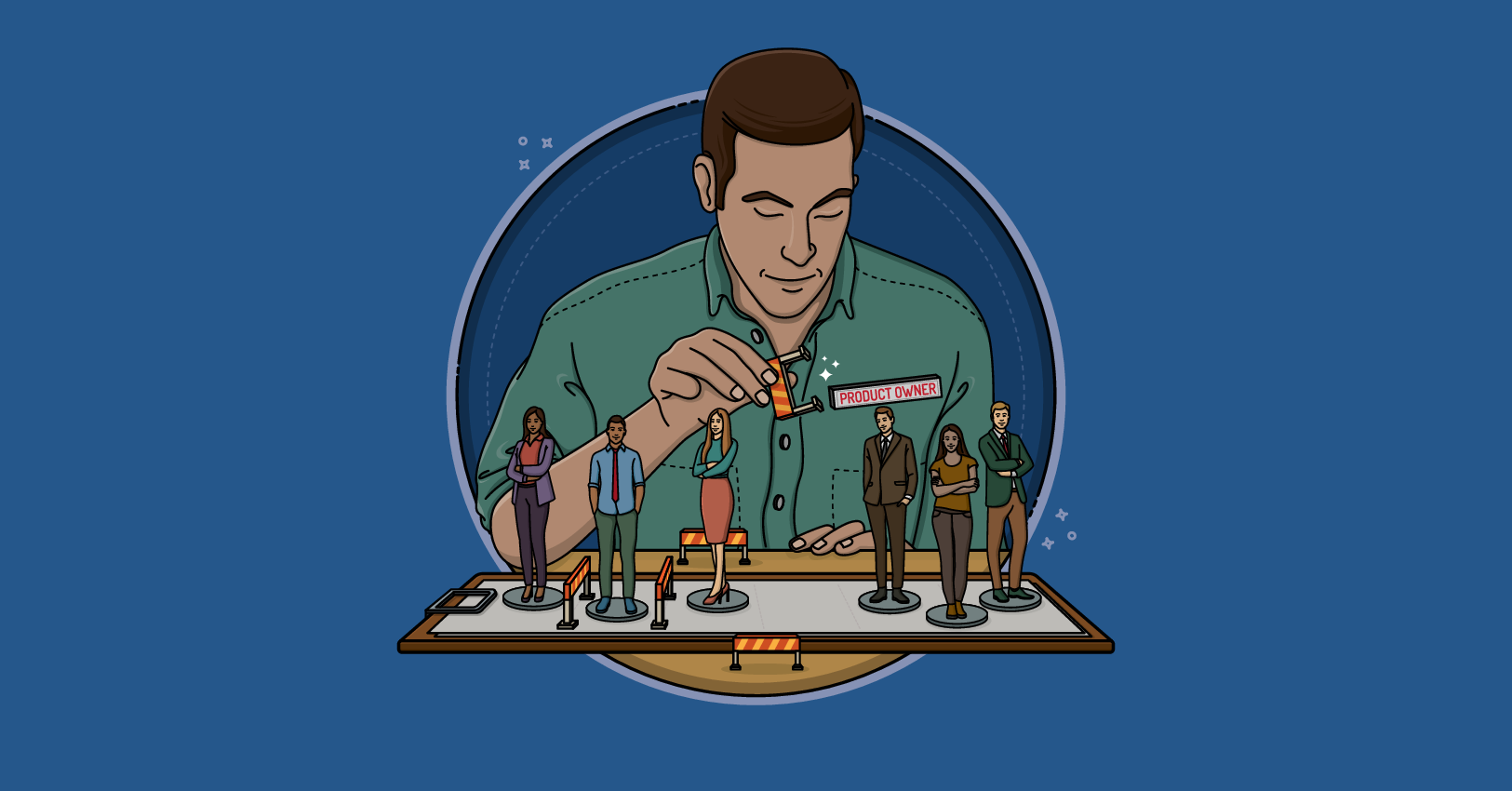
Successful product owners will see their stakeholders as a team, not merely a set of individuals.
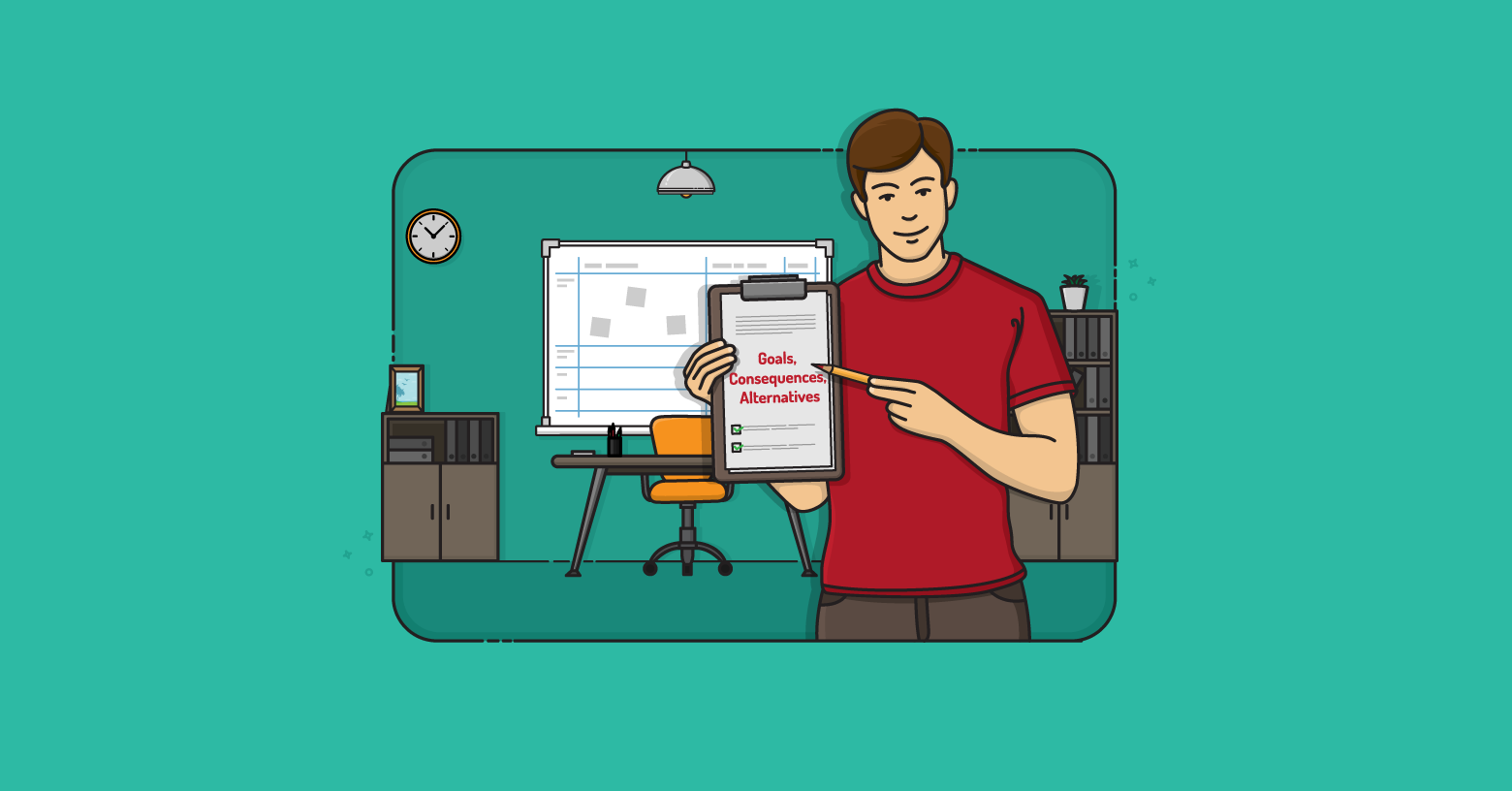
Telling a stakeholder you can’t work on their feature is difficult. Here are ways to make that conversation easier.
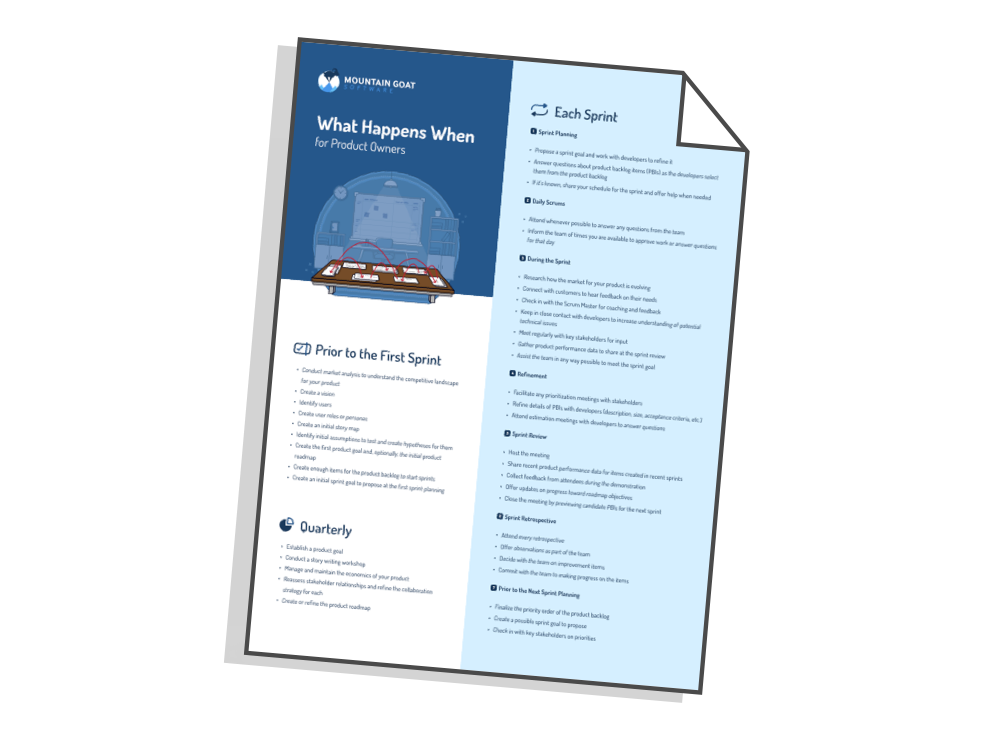
A downloadable guide for understanding what Product Owners do and when those responsibilities occur.
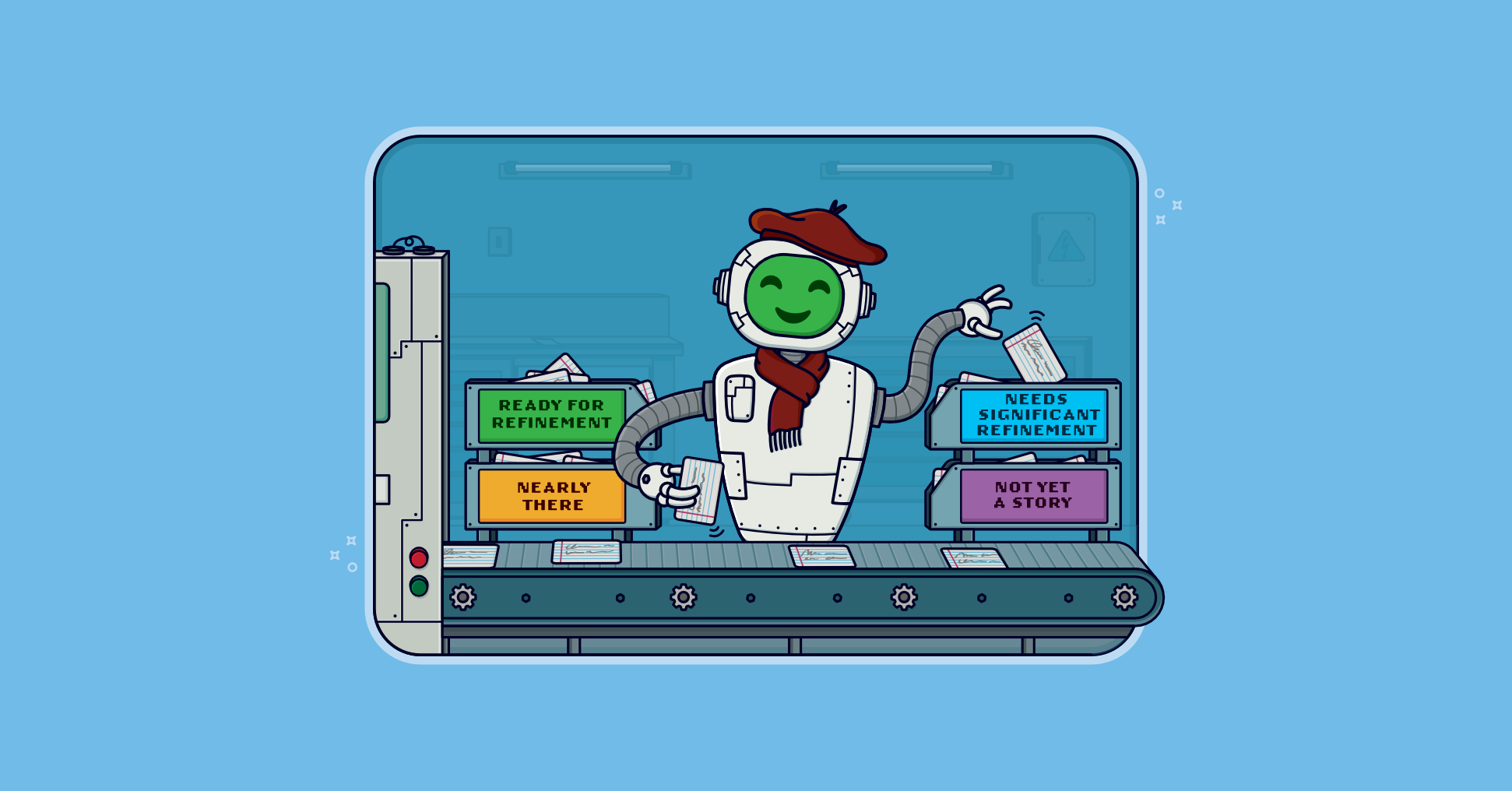
Paste in a user story, job story, technical story, bug, spike, or chore and get coaching on clarity, readiness, testability, and backlog placement.