
Agile Leaders Ask Better Planning Questions
Better planning starts with better questions.
Leaders need plans. That is not anti-agile. Organizations need to make decisions about launches, budgets, staffing, sales commitments, customer expectations, and sequencing. A leader who asks, “When can we have this?” is not doing anything wrong.
But the way leaders ask planning questions matters.
Ask the wrong question and a team may feel pressured to give reassurance.
Ask the right question and a team can help everyone understand the assumptions, risks, tradeoffs, and options.
A question like “Can you commit to all of this by the end of the quarter?” often sounds like a request for a yes.
A better question is:
“What would need to be true for us to deliver this by the end of the quarter?”
That question changes the conversation.
It invites the team to talk about scope, capacity, dependencies, unknowns, risks, quality, interruptions, and tradeoffs. It gives leaders better information. It gives teams more room to be honest.
And it turns planning into a shared problem.
Agile Teams Can Plan
A common myth is that agile teams cannot plan.
Agile teams can plan.
Agile teams can estimate, forecast, sequence work, discuss tradeoffs, and make reasonable plans. In fact, agile teams often plan better because they plan with more frequent feedback and a clearer understanding that not everything is knowable at the start.
But agile teams plan differently.
They should not be asked to pretend that an early forecast is a guarantee. They should not be pressured into giving a single date when a range would be more honest. They should not be told to “commit” before enough is known. And they should not be punished later for surfacing uncertainty early.
Agile planning works best when everyone understands that a plan is a forecast based on what is known now.
As the team learns more, the plan should improve.
Why Planning Conversations Go Wrong
Planning conversations often go wrong because leaders and teams are answering different questions.
A leader asks, “Can we deliver this by October?”
The leader may mean, “What are our options? What tradeoffs do we need to consider? What risks should I know about? What can we say to customers?”
The team may hear, “Say yes unless you want to disappoint me.”
So the team says yes.
Or maybe it says, “We think so.”
Or maybe it gives a date with more precision than the situation deserves.
Everyone leaves the meeting feeling temporarily better.
Then reality catches up.
A dependency takes longer than expected. A backlog item is larger than it looked. A stakeholder changes priorities. A technical issue appears. A requirement emerges after users see the product. The team discovers that “done” includes more testing, documentation, integration, or review than anyone discussed.
Now the plan looks wrong.
But the real problem may have started with the question.
Ask What Would Need to Be True
One of the best planning questions a leader can ask is:
“What would need to be true for this plan to work?”
That question is useful because it does not ask the team to defend a yes or no.
It asks the team to think.
Maybe the plan works if scope stays flexible. Maybe it works if another team delivers an API by the end of the month. Maybe it works if the Product Owner can make decisions within twenty-four hours. Maybe it works if the team is not pulled into support work. Maybe it works if two lower-value features are deferred.
Now the conversation is about the plan’s assumptions.
That is where leaders can help.
They can remove obstacles, make tradeoffs, clarify priorities, adjust dates, reduce scope, add support, or decide that the plan is too risky.
The team’s job is not to make every plan work.
The team’s job is to help everyone understand what the plan depends on.
Ask for Ranges, Not False Precision
Precise numbers feel good.
They are not always better.
A team that says, “We’ll finish in 17 weeks,” may sound more confident than a team that says, “We think this is 16 to 20 weeks.” But the range is often the more honest answer.
A range says, “Here is what we know, and here is the uncertainty we still carry.”
That is valuable.
Leaders should encourage teams to use ranges when uncertainty is real. A range can apply to dates, scope, cost, velocity, or confidence.
For example:
“We think we can deliver the highest-priority items in 6 to 8 sprints.”
“We expect to finish between 150 and 200 points before the release date.”
“We are very confident about the first three items, less confident about the next five, and not confident yet about the rest.”
Those answers are more useful than pretending the team knows exactly what will happen.
A leader who wants reliable planning should not punish ranges.
A leader should ask what would narrow the range.
Ask What Is in the Will-Have, Might-Have, and Won’t-Have Zones
When a deadline matters, leaders often ask, “What will be done by then?”
That can be a hard question to answer as a single list.
A better approach is to think in zones.
Some items are likely enough that the team can treat them as will-have. Some are plausible but not certain. Those are might-have. Others are unlikely before the date unless something changes. Those are won’t-have.
This creates a much better conversation.
Instead of arguing about whether the entire wish list will fit, leaders and teams can talk about what is most important. Which items must be in the will-have zone? Which items could move? Which items are nice but not necessary? Which assumptions would need to change for a might-have item to become more likely?
This is planning as decision-making.
Not planning as a promise.
Ask What Can Change
A plan usually has variables.
Scope can change. Dates can change. Team size can sometimes change. Keep quality expectations explicit. The team may still have room to change how it achieves the outcome. Stakeholder involvement can change. Sequence can change. Expectations can change.
Leaders sometimes ask planning questions as if nothing can move.
Can we have all of this by this date with this team while keeping quality high and absorbing whatever interruptions come along?
The honest answer is often no.
But a better conversation starts when leaders ask what can change.
“What scope is negotiable?”
“Which date matters most?”
“What would we do differently if the date mattered more than the full feature set?”
“What would we do differently if the full feature set mattered more than the date?”
“What is the simplest version that would still be useful?”
“What can we learn earlier?”
Those questions help the team and leaders make tradeoffs before the tradeoffs are forced on them.
Ask About Assumptions
Every plan rests on assumptions.
Some are obvious. Some are hidden.
The team assumes a stakeholder will be available. The Product Owner assumes a decision has already been made. Leaders assume another team will finish its work first. Sales assumes a feature means one thing; the team assumes it means another. Everyone assumes the work is similar to something done before.
A good planning conversation makes assumptions visible.
Ask:
“What are we assuming?”
“What are we assuming that might not be true?”
“Which assumption worries us most?”
“How soon can we test that assumption?”
“What would change if that assumption is wrong?”
These questions are useful because plans usually fail at the assumptions, not at the math.
A plan based on bad assumptions can look very precise.
It can still be wrong.
Ask About What Is Not Known Yet
Not all requirements are knowable at the start.
Some requirements are known. People can tell us about them. Some are overlooked. We could have found them if we had asked better questions or talked with different people. And some are emergent. They appear only after users see something, try something, or react to an early version of the product.
That means leaders should not expect teams to remove all uncertainty before starting.
They should expect teams to manage uncertainty responsibly.
Ask:
“What do we know enough about to start?”
“What do we need to learn soon?”
“What feedback would reduce uncertainty?”
“What should we build first so we learn sooner?”
“What could emerge once users see this?”
These questions help teams plan in a way that uses learning rather than pretending learning will not be needed.
Ask What Could Make the Plan Wrong
Many planning conversations are biased toward optimism.
People want the plan to work. They want the date to be possible. They want the customer to be happy. They want leadership to feel confident. They do not want to be seen as negative.
So risks stay hidden.
Leaders can help by making risk discussion normal.
Ask:
“What could make this plan wrong?”
“What could make this take longer than we expect?”
“Where are we least confident?”
“What has surprised us on similar work before?”
“What are we not talking about because it is uncomfortable?”
These questions are not pessimistic.
They are useful.
A risk named early gives the organization options. A risk hidden until the end becomes a surprise.
Ask What Help the Team Needs
A team may not need a leader to solve the work.
It may need a leader to solve the conditions around the work.
The team may need a faster decision. It may need a stakeholder to attend reviews. It may need another team to prioritize a dependency. It may need protection from interruptions. It may need access to users. It may need clarity about which goal matters most.
So ask:
“What decision do you need from me?”
“What obstacle can I help remove?”
“Who needs to be in this conversation?”
“What priority conflict needs to be resolved?”
“What would make this plan more likely to succeed?”
These questions keep leaders involved at the right level.
The leader is not taking over the work. The leader is helping create the conditions in which the team can make and meet a better plan.
Ask How We Will Know Sooner
Agile planning should reduce the cost of being wrong.
One way to do that is to learn sooner.
Instead of waiting until a release date to discover whether the plan worked, leaders should ask how the team can get feedback earlier.
“What can we show in the next Sprint Review?”
“What can we test with users before building the whole thing?”
“What can we release to a small group first?”
“What decision can we make after the next two sprints?”
“What would tell us we should change direction?”
These questions help teams use the feedback loops agile already provides.
A plan should not sit untouched while reality changes around it.
A plan should improve as the team learns.
Ask Less Like a Judge and More Like a Partner
Tone matters.
The same question can help or hurt depending on how it is asked.
A leader asking, “Why is this taking so long?” may create defensiveness. A leader asking, “What is making this harder than we expected?” invites problem-solving.
A leader asking, “Can you commit?” may create pressure. A leader asking, “What would make this a responsible commitment?” invites honesty.
A leader asking, “Why didn’t you know this earlier?” may discourage transparency. A leader asking, “How can we learn this earlier next time?” encourages improvement.
Agile planning should not feel like the team is on trial.
It should feel like leaders and teams are trying to solve the same problem.
What Not to Ask
Some questions make planning worse.
“Can you guarantee this?”
No. If you want a guarantee, buy a toaster.
“Why can’t you just commit?”
Because the team may not control all the variables.
“Can you just add this one thing?”
Maybe. But something else may need to change.
“Why is your estimate different from the other team’s?”
Because teams estimate differently, work in different contexts, and face different constraints.
“Can you be more aggressive?”
Maybe. But ask what risk that creates and whether the tradeoff is worth it.
The problem with these questions is not that leaders should avoid hard conversations.
The problem is that these questions often push teams toward the answer leaders want to hear rather than the answer leaders need to hear.
Better Planning Questions Leaders Can Use
Use these questions when planning feels too vague, too optimistic, or too tense.
What outcome are we trying to achieve?
What would need to be true for this plan to work?
What are we assuming?
Which assumptions are riskiest?
What could make this plan wrong?
What is in the will-have, might-have, and won’t-have zones?
What scope is negotiable?
What date matters most, and why?
What is the simplest version that would still be useful?
What do we need to learn before we can be more confident?
What feedback can we get sooner?
What tradeoff are we avoiding?
What decision do you need from me?
What obstacle can I help remove?
What would make this plan more realistic?
The list is not magic.
The point is to ask questions that create transparency instead of pressure.
Planning Is a Shared Problem
Leaders sometimes treat planning as something teams owe them.
The team goes away, estimates the work, and returns with a date. The leader accepts it, rejects it, or pressures the team to improve it.
That is not the best way to plan.
Planning works better when leaders, Product Owners, stakeholders, and teams treat it as a shared problem.
The team brings knowledge of the work. The Product Owner brings knowledge of value and priority. Stakeholders bring knowledge of customers, users, market windows, and business needs. Leaders bring knowledge of strategy, constraints, commitments, and organizational tradeoffs.
Better planning uses all of that information.
No one person has the whole picture.
That is why the conversation matters.
Common Mistakes Leaders Make
Asking for Certainty Too Early
Early plans are useful, but they are incomplete. Asking for too much certainty too soon encourages teams to hide uncertainty or pad the plan.
Treating Estimates as Commitments
An estimate is a forecast based on what is known now. Treating it as a promise makes future estimates less honest.
Ignoring Tradeoffs
If scope, date, quality, and capacity are all treated as fixed, the team has no room to plan honestly.
Asking Questions That Signal the Desired Answer
Teams can hear when “Can we do this?” really means “Please say yes.” Leaders need to ask questions that make honesty safe.
Leaving Teams Alone with Organizational Problems
A team cannot plan around every dependency, priority conflict, interruption, or stakeholder issue without leadership support.
Updating the Plan Without Updating Expectations
If the plan changes because the team learned something, leaders need to help update stakeholder expectations. Otherwise the old plan remains politically alive even after it is no longer realistic.
How to Change Your Next Planning Conversation
Start with the next plan your team brings you.
Do not begin by asking whether they can do more.
Begin by asking what the plan depends on.
Ask what is known, what is uncertain, what assumptions matter most, and what could be learned sooner. Ask what tradeoffs are available. Ask what support the team needs from leaders or stakeholders.
Then decide together what to do.
Maybe the plan is good enough. Maybe scope should change. Maybe the date should change. Maybe the team needs to learn something before making a stronger forecast. Maybe a leader needs to resolve a priority conflict. Maybe stakeholders need to accept that not everything will fit.
That is better planning.
Not because the plan becomes perfect.
Because the conversation becomes honest enough to be useful.
A Leadership Self-Check
Use these questions to decide whether your planning conversations are helping.
- Do teams feel safe giving ranges instead of false precision?
- Are estimates treated as forecasts rather than guarantees?
- Are leaders asking what would need to be true for the plan to work?
- Are assumptions visible?
- Are tradeoffs discussed early enough?
- Are teams able to say what they need from leaders?
- Are stakeholders involved before surprises become expensive?
- Are plans updated as the team learns?
- Are leaders creating transparency or asking for reassurance?
- Is planning treated as a shared problem?
Let the answers improve the next conversation.
FAQ
What Is the Best Planning Question for Agile Leaders?
One of the best is, “What would need to be true for this plan to work?” It invites the team to discuss assumptions, risks, dependencies, tradeoffs, and support needed from leaders.
Can Agile Teams Commit to Dates?
Sometimes, but leaders should understand what the commitment depends on. A date is more reliable when scope, assumptions, dependencies, and risks are visible and when the team has enough history to forecast responsibly.
Should Leaders Ask for a Date or a Range?
Use a range when uncertainty is real. A range is often more accurate and more useful than a single precise date. Leaders can then ask what would narrow the range.
How Do Leaders Avoid Pressuring Teams Into False Certainty?
Ask questions that surface uncertainty rather than punish it. Treat estimates as forecasts. Make tradeoffs explicit. Thank teams for surfacing risk early.
What If the Business Needs a Fixed Date?
Then the conversation should shift to scope and tradeoffs. Ask what can fit by the date, what is essential, what is negotiable, and what would need to be true for the most important outcome to be delivered.
What If a Team Refuses to Estimate or Plan?
That is not agile. Teams should help the organization make decisions. They may need to use ranges, assumptions, and feedback loops, but refusing to plan is not responsible agility.
What Should Leaders Do When the Plan Changes?
Ask what the team learned, what changed, what tradeoffs are now available, and what stakeholders need to know. A changed plan is not automatically a failure. It may be evidence that the organization is learning.
Ask Better Planning Questions Resources

Useful when leadership pressure is making estimates, velocity, or sprint plans less honest.
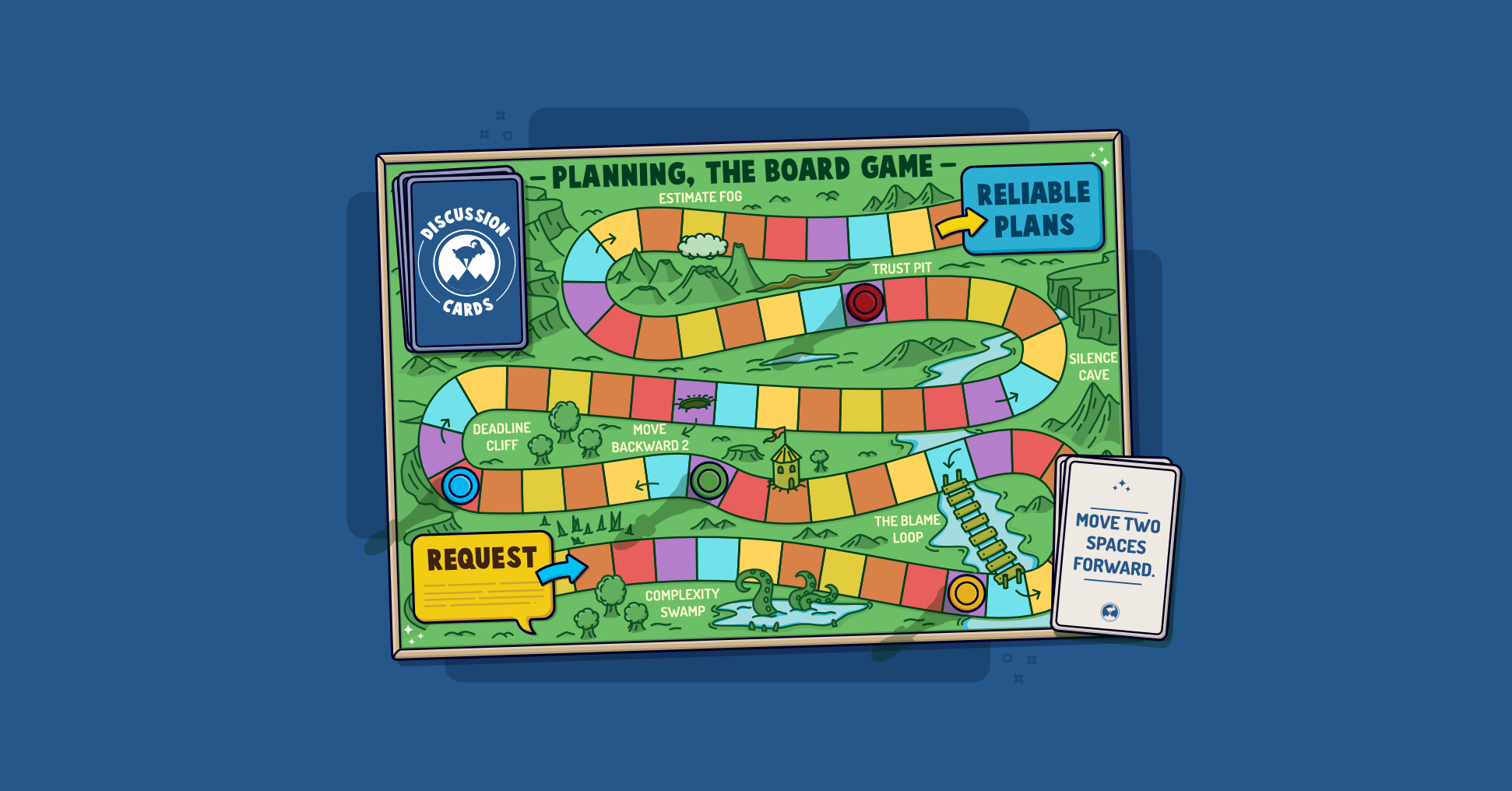
Useful when leaders and teams need better conversations about scope, dates, assumptions, and tradeoffs.

A concise resource for leaders who want practical answers about agile leadership and team support.
Useful when planning pressure, unrealistic dates, or unclear tradeoffs are causing teams to overcommit.