
The Mountain Goat Software Blog
Blog articles

What’s the difference between a user story and a task? Well that’s an easy question, I thought, the first time it was asked of me in a Certified ScrumMaster class. “The difference is …,” I...
Having a “definition of done” has become a near-standard thing for Scrum teams. The definition of done (often called a “DoD”) establishes what must be true of each product backlog item for that item to be done. A typical DoD would be something similar to:
Don't blindly adopt anything. Scrum is comprised of a self-organizing team that is given...

A product owner hands 10 story cards to the team. The team reads them and hands the fifth and sixth cards back to the product owner. By the end of the sprint, the team delivers the functionality described on cards 1, 2, 3, 4, and 7. But the team has not...

I have a bit of a problem with all the hatred shown to so-called vanity metrics. Eric Ries first defined vanity metrics in his landmark book, The Lean Startup. Ries says...
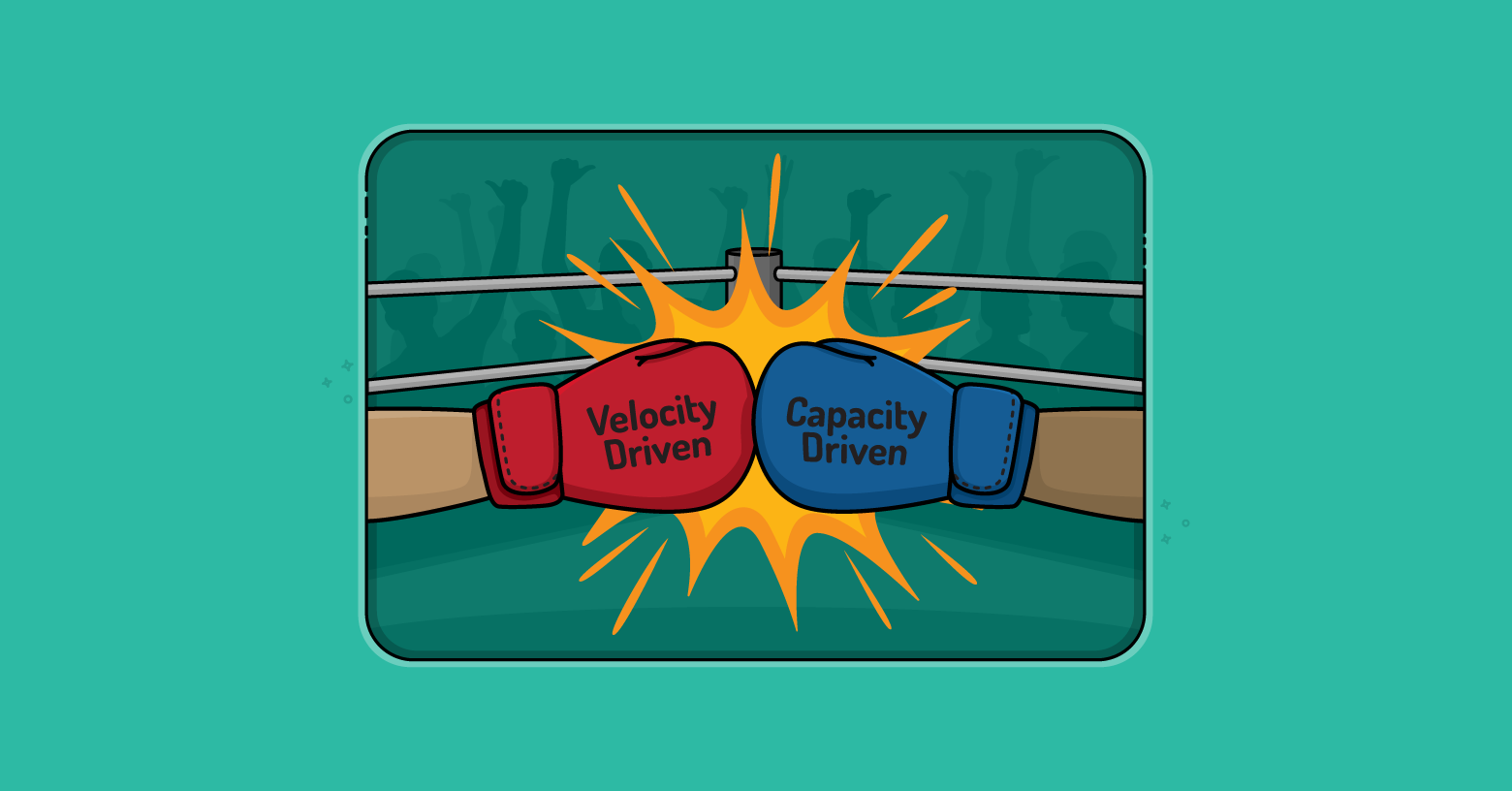
The problem with velocity-driven sprint planning is that velocity is simply too variable to be useful in the short term.

There are two primary ways for planning a sprint: velocity-driven sprint planning and commitment-driven sprint planning. In last week’s post, I described velocity-driven planning; so in this week’s, we turn our attention to commitment-driven sprint planning. A commitment-driven sprint planning meeting involves the product owner, ScrumMaster...

There are two general approaches to planning sprints: velocity-driven planning and capacity-driven planning. Over the next three posts, I will describe each approach, and make my case for the one I prefer. Let’s begin with velocity-driven sprint planning because it’s the easiest...
Agile teams build high-quality products. Agile team members write high-quality code. Agile teams produce functionality quickly by not sacrificing quality. Each of these is something I’ve said before. And if you haven’t said these exact things, you’ve likely...

If story points are an estimate of the time (effort) involved in doing something, why not just estimate directly in hours or days? Why use points at all? There are multiple good reasons to estimate product backlog items in story points, and I cover them...
Last week, I talked about the concept of equality on an agile team. I mentioned that…
In 2001, author Ray Bradbury gave a talk at the annual Writer’s Symposium by the Sea in San Diego. Fortunately for those of us who were not there, his speech was video recorded and is available. Bradbury—the author of books such as Fahrenheit 451, The Martian Chronicles, Something Wicked This Way Comes—was offering advice...